
VoIP Systems For Small And Medium Businesses: Key Features And Core Components Explained

Call handling, signalling, and feature set for small and medium business VoIP systems
Signalling protocols like SIP govern how calls are established, modified, and terminated. SIP messages carry headers that identify endpoints, handle authentication, and convey session parameters. Real-time Transport Protocol (RTP) typically transports media once a session is established, and Secure RTP (SRTP) can add encryption for media streams. The choice of protocols and their secure variants may affect device compatibility and computational load on endpoints and gateways, so administrators often check processor and battery implications for mobile and embedded devices.
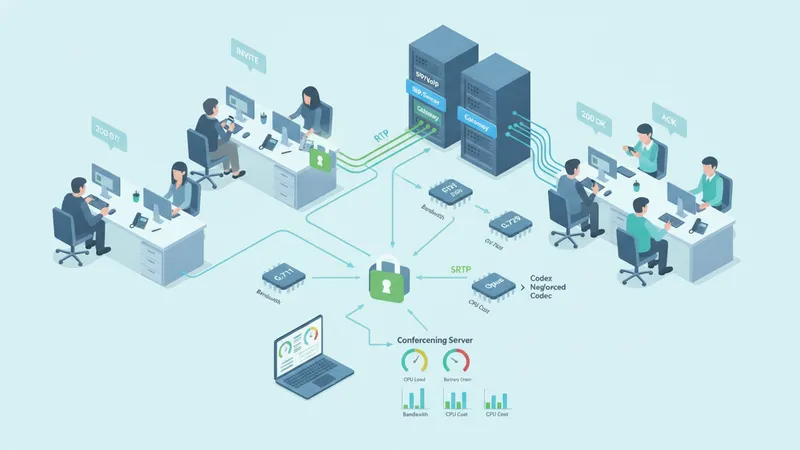
Codecs determine how audio is encoded and compressed for transport. Common examples include G.711 for uncompressed audio and more compressed codecs such as G.729 or Opus that reduce bandwidth at the cost of additional processing. Selection of codecs often balances available network bandwidth, expected audio quality, and licensing constraints. Some deployments negotiate codec preferences dynamically based on endpoint capabilities, while others enforce a common codec to simplify media handling through gateways and conferencing servers.
Call management features frequently used in small and medium organisations include auto attendants, IVR menus, hunt groups, voicemail-to-email, and call queues. Auto attendants route callers with menu prompts, while IVR systems can collect inputs to guide routing logic. Queuing systems may provide estimated wait behaviours and overflow rules that divert calls as needed. These features are often configurable through an administrative interface and may integrate with presence information or business calendars to alter call flows according to availability.
Conferencing and messaging components extend basic telephony by linking multiple participants and combining synchronous and asynchronous communication. Conferencing servers may provide audio bridges, participant controls, and optional recording. Messaging elements can synchronise voice messages with email or team collaboration tools so that messages may be retrieved on different devices. When selecting these features, teams typically consider scalability, concurrent participant limits, and any storage or compliance implications for recording and message retention.