
Rubber Mixer Machine: Overview Of Types, Components, And Applications

Key components of rubber mixing machines and their roles
Rotors are primary mechanical elements in enclosed mixers and are shaped to generate kneading, shearing, and folding actions. Rotor geometry, clearance, and rotational speed determine shear profile and dispersion capability. In open mills, the heated roll surfaces and nip setting control the mechanical energy imparted to the compound. Drive systems—electric motors, gearboxes, and hydraulic rams—provide force and motion; their responsiveness and control fidelity can influence cycle precision. Accurate torque and power measurement in drives often serve as process indicators rather than absolute metrics of compound quality.
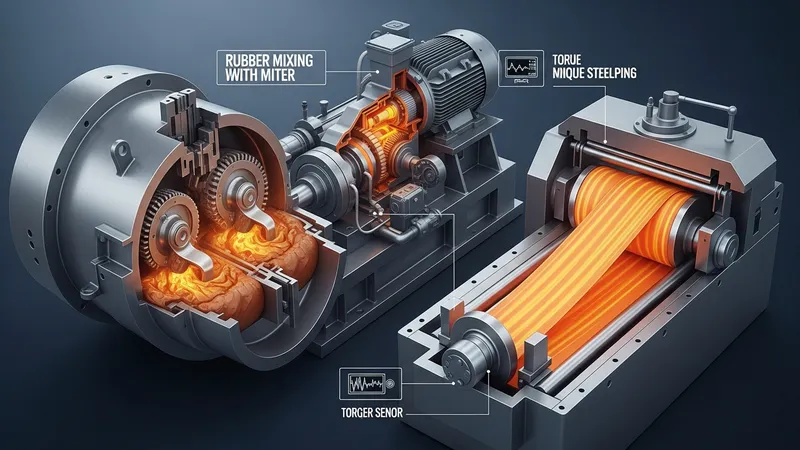
Temperature control components include heating elements, cooling jackets, and thermostatic regulation systems. For enclosed mixers, chamber walls and rotors may be water- or oil-cooled to absorb exothermic heat of mixing; rolls often have internal channels for heat transfer fluids. Sensors such as thermocouples or RTDs monitor internal temperatures and feed data to control systems. Seals and bearings allow rotating parts to operate while containing compound and lubricants; their condition often affects contamination risk and operational reliability, and wear monitoring may inform preventive maintenance schedules.
Material handling subsystems—feeders, weigh scales, and dosing valves—contribute to compound consistency by controlling additive sequence and mass fractions. Accurate dosing of fillers, curatives, and liquids often matters more than minor variations in mixer shear, because ingredient ratios strongly influence final properties. Discharge mechanisms and downstream transfer, such as ram ejection in internal mixers or feed screws on continuous lines, determine how the mixed compound is presented to subsequent processes. Controls and human-machine interfaces provide recipe management and capture cycle data for traceability.
Considerations for component selection include ease of access for inspection, modularity for parts replacement, and compatibility with existing plant utilities such as cooling water quality and electrical supply. Corrosion-resistant surfaces or specific coatings may be specified where abrasive fillers or reactive chemistries are used. Designers often balance robust construction against the need for precision control and easy servicing; these trade-offs typically reflect the intended production scale and expected compound complexity.